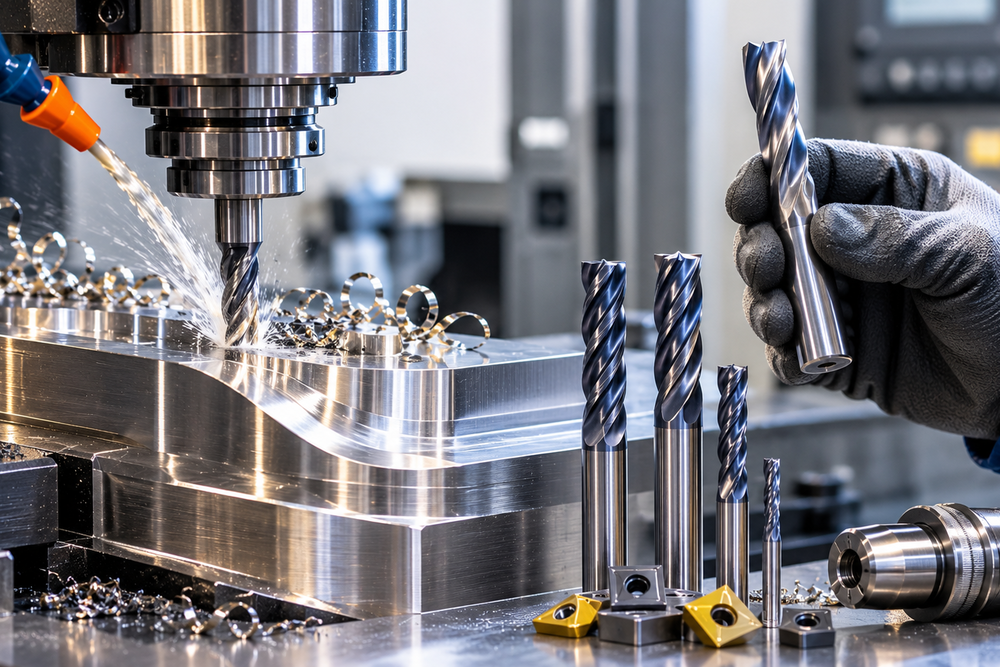
Stainless steel is valued for its strength, corrosion resistance, and durability, but machining it demands the right cutting strategy. Its tendency to work-harden, generate heat, and resist cutting can put considerable pressure on tooling. Choosing suitable cutting tools for stainless steel is therefore essential for achieving clean finishes, consistent dimensions, longer tool life, and efficient production.
For manufacturers, workshops, and CNC machining companies, the right tool is not simply about selecting a hard cutting edge. Tool geometry, coating, cutting parameters, coolant delivery, machine rigidity, and the stainless-steel grade being machined all influence the final result.
What Makes Stainless Steel Difficult to Machine?
Stainless steel behaves differently from many conventional machining materials. Grades such as austenitic 304 and 316 are known for their toughness and tendency to work-harden when subjected to excessive rubbing or repeated passes. Several machining challenges need to be considered:
- Work hardening: A dull or incorrectly selected tool can harden the surface, making subsequent cutting more difficult.
- Heat generation: Stainless steel does not dissipate heat as easily as some other metals, causing heat to concentrate around the cutting zone.
- Material adhesion: Chips can adhere to the cutting edge, affecting surface quality and tool performance.
- Long, difficult chips: Certain stainless-steel grades can produce continuous chips that interfere with machining.
- High cutting forces: Tough material places greater demands on the cutting edge and machine setup.
These factors make tool selection an important part of the machining process rather than an afterthought.
Choosing the Right Cutting Tool Material
The tool material should match the stainless-steel grade, machining operation, cutting speed, and required production volume.
- Carbide Tools: Carbide is widely used for CNC machining stainless steel because it offers a strong combination of hardness, wear resistance, and cutting performance. Carbide milling cutters, drills, and turning inserts can handle demanding production applications when the correct grade and geometry are selected. For high-speed machining, carbide tools with appropriate coatings can provide better resistance to heat and wear while maintaining a sharp cutting edge.
- Coated Cutting Tools: Coatings can improve tool performance by reducing friction and protecting the cutting edge from heat and wear. Depending on the machining application, coatings such as TiAlN and AlTiN can be considered for operations involving elevated temperatures. The coating should not be selected independently. The substrate, cutting geometry, machine conditions, coolant strategy, and machining parameters all need to work together.
- High-Speed Steel Tools: HSS tools remain useful for selected drilling and general-purpose machining applications, particularly where cutting speeds are moderate. They can also be practical for certain workshop operations where flexibility and tool toughness are more important than maximum production rates.
- Tool Geometry Matters: Even a high-quality tool can deliver disappointing results if its geometry is unsuitable for stainless steel. A sharp cutting edge is generally preferred because it cuts the material rather than simply pushing against it. Proper rake angles, relief angles, flute design, and edge preparation can influence chip evacuation, cutting forces, heat generation, and surface finish. For milling applications, flute design deserves particular attention. The tool should provide sufficient space for chip evacuation without compromising cutting-edge strength. Drilling also requires careful consideration. A drill that struggles to evacuate chips can generate excessive heat and increase the risk of premature failure. Proper point geometry and coolant delivery can make a substantial difference.
- Match the Tool to the Stainless-Steel Grade: Not all stainless steel machines in the same way. Austenitic grades such as 304 and 316 can behave differently from ferritic, martensitic, and precipitation-hardening grades. Before selecting cutting tools for stainless steel, consider:
- Stainless-steel grade
- Material hardness
- Machining operation
- Required surface finish
- Cutting speed and feed rate
- Depth of cut
- Machine rigidity
- Coolant availability
- Production volume
For example, a tool suitable for a finishing operation may not be the best choice for heavy roughing. Similarly, a drill selected for a small batch of components may not be the most economical option for continuous production.
Avoid These Common Tooling Mistakes
Several tooling mistakes can quickly increase machining costs.
- Using a worn tool for too long: A tool that has already lost its cutting efficiency can generate more heat and produce poor-quality components.
- Choosing tools based only on price: The cheapest tool may have a shorter working life or require slower machining parameters, increasing the overall cost per component.
- Ignoring work hardening: Repeated rubbing instead of decisive cutting can harden the material and make the next pass more difficult.
- Using unsuitable cutting parameters: Excessive speed, insufficient feed, or an inappropriate depth of cut can shorten tool life.
- Overlooking machine condition: Even the best tooling cannot compensate for excessive vibration, poor work holding, or inadequate machine rigidity.
How the Right Tooling Can Improve Production?
A well-selected cutting tool can influence far more than the appearance of a machined component. It can contribute to stable production, predictable tool changes, improved surface quality, and reduced scrap.
For manufacturers working with stainless-steel components for sectors such as oil and gas, automotive, medical equipment, food processing, and industrial machinery, consistency is particularly important. Components often need to meet tight dimensional requirements while maintaining reliable surface quality. This is where working with an experienced cutting tools supplier UAE can provide practical value. A knowledgeable supplier can help businesses evaluate tool specifications based on their actual machining requirements rather than simply recommending a standard product.
Choosing a Reliable Cutting Tools Supplier
When sourcing machining tools, look beyond product availability. A dependable supplier should understand different tool materials, geometries, coatings, and machining applications. Consider a supplier that offers:
- A broad range of carbide and coated tooling
- Tools for milling, turning, drilling, and other operations
- Technical guidance for tool selection
- Consistent product quality
- Suitable options for different stainless-steel grades
- Reliable stock and delivery
- Support for production and high-volume applications
The right supplier can also help identify opportunities to improve tool life and machining efficiency by reviewing the relationship between tooling and cutting parameters.
Stainless steel machining rewards precision in tool selection. The right combination of tool material, geometry, coating, cutting parameters, coolant, and machine setup can produce cleaner cuts, better finishes, and more predictable tool life.
Whether you are machining 304, 316, or another stainless-steel grade, choosing the correct cutting tools for stainless steel can make a measurable difference to production performance. Partnering with a capable cutting tools supplier UAE can further simplify the selection process and help manufacturers choose tooling that fits their machines, materials, and production goals. For businesses seeking better machining results, the objective should not be to find just any cutting tool. It should be to find the right cutting edge for the job – and make every cut count.