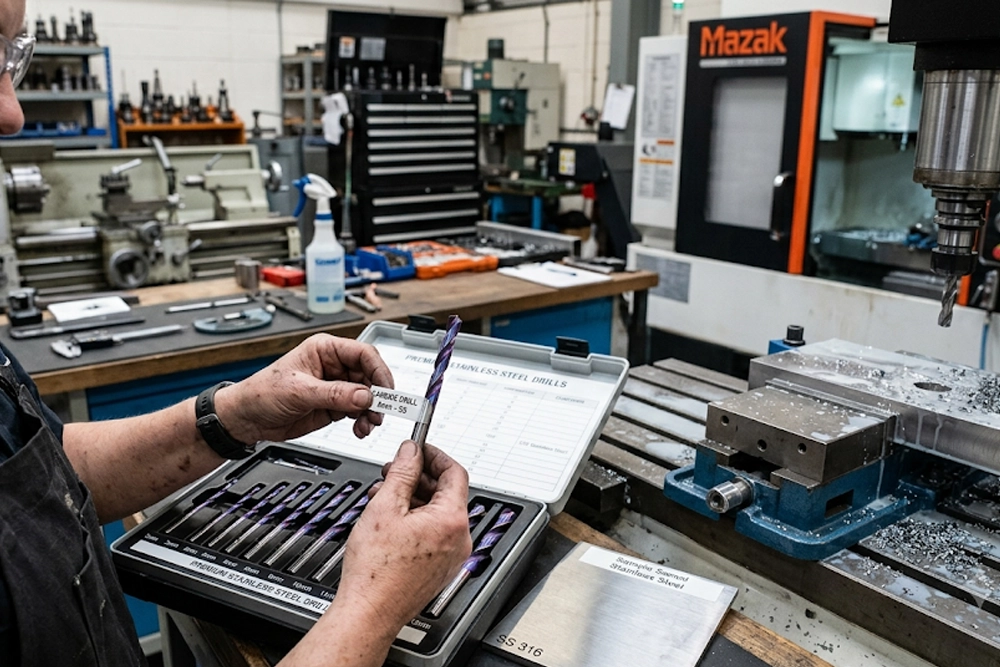
Stainless steel is one of the most widely used materials across industries such as construction, automotive, aerospace, medical equipment, food processing, and industrial manufacturing. Its excellent corrosion resistance, strength, and durability make it a preferred choice for demanding applications. However, these same properties also make stainless steel one of the more challenging materials to machine. Drilling clean, accurate holes requires the right cutting tool, proper machining parameters, and careful planning.
Selecting the right carbide drill for stainless steel can significantly improve machining efficiency, reduce tool wear, and deliver superior hole quality. With numerous drill geometries, coatings, and specifications available, choosing the most suitable option requires understanding both the material and the machining process.
Tips for Choosing the Ideal Carbide Drill for Stainless Steel
Below we explain the key factors to consider when selecting a drill that delivers consistent performance while maximizing productivity.
- Understand the Type of Stainless Steel – The first step in choosing the correct drill is identifying the grade of stainless steel being machined. Different grades have varying hardness, toughness, and heat resistance, all of which influence drilling performance. Common stainless steel categories include:
- Austenitic stainless steel
- Ferritic stainless steel
- Martensitic stainless steel
- Duplex stainless steel
- Precipitation-hardening stainless steel
Austenitic grades, such as 304 and 316, are particularly challenging because they tend to harden quickly during machining. Selecting a drill designed to withstand these conditions helps maintain cutting efficiency and prolongs tool life.
- Choose the Right Drill Material – The drill material plays a major role in machining performance. While high-speed steel drills may be suitable for softer materials or occasional use, carbide drills offer significantly better performance for stainless steel. Carbide provides:
- Higher hardness
- Better heat resistance
- Improved wear resistance
- Greater cutting speeds
- Longer service life
A solid carbide drill is especially suitable for high-volume production where precision, consistency, and durability are essential. Its rigid construction minimizes deflection and enables accurate hole positioning even in demanding machining applications.
- Consider the Drill Geometry – Drill geometry directly affects chip evacuation, cutting forces, and hole quality. Important features include:
- Point Angle – A point angle between 135° and 140° is commonly recommended for stainless steel. This geometry helps reduce cutting pressure while improving centering accuracy.
- Helix Angle – Higher helix angles promote smoother chip evacuation, preventing chips from clogging the flutes during deep-hole drilling.
- Web Thickness – A thinner web reduces thrust forces and makes drilling easier, especially in tougher stainless steel grades.
Choosing the correct geometry helps maintain stable cutting conditions while minimizing tool wear.
- Select the Appropriate Coating – Modern drill coatings significantly improve machining performance by reducing friction and heat generation. Popular coating options include:
- Titanium Aluminum Nitride (TiAlN)
- Aluminum Chromium Nitride (AlCrN)
- Titanium Silicon Nitride (TiSiN)
Selecting the right coating helps extend tool life while maintaining cutting performance.
- Match the Drill Diameter and Length -Choosing the correct drill dimensions is equally important. Consider:
- Required hole diameter
- Hole depth
- Machine rigidity
- Workpiece thickness
Using an unnecessarily long drill increases vibration and deflection, potentially reducing hole accuracy. Whenever possible, select the shortest drill capable of completing the required operation. Proper sizing also contributes to improved surface finish and dimensional consistency.
- Evaluate Coolant Delivery – Heat is one of the biggest challenges when drilling stainless steel. Excessive temperatures accelerate tool wear and may affect workpiece quality. Many modern carbide drills feature internal coolant channels that deliver coolant directly to the cutting edge. Benefits include:
- Lower cutting temperatures
- Better chip evacuation
- Reduced friction
- Longer tool life
- Improved hole finish
Efficient cooling is particularly beneficial when drilling deeper holes or machining difficult stainless steel grades.
- Consider Machine Capability: Even the best drill cannot perform effectively if the machine lacks sufficient rigidity or spindle performance. Before selecting a drill, evaluate:
- Machine spindle speed
- Available horsepower
- Tool holding system
- Machine stability
- Coolant system
A stable machine setup reduces vibration, resulting in greater drilling accuracy and improved tool longevity.
- Optimize Cutting Parameters – Proper cutting conditions are just as important as selecting the right drill. Key machining parameters include:
- Cutting Speed
- Feed Rate
- Peck Drilling
Always follow the manufacturer’s recommended machining parameters for the specific drill and stainless steel grade.
- Focus on Chip Control – Poor chip evacuation is a common cause of drilling problems. Long, continuous chips can:
- Damage the workpiece
- Increase cutting temperatures
- Break cutting edges
- Reduce hole quality
Selecting drills with optimized flute designs improves chip removal and supports uninterrupted machining. Maintaining effective chip control is particularly important during high-production machining.
- Balance Cost with Long-Term Value – Although premium carbide drills typically have a higher purchase price, they often provide greater long-term value through:
- Longer tool life
- Faster machining
- Reduced downtime
- Lower replacement frequency
- Improved production efficiency
Instead of evaluating only the initial purchase cost, manufacturers should consider the total cost per hole produced. In many applications, investing in a high-quality carbide drill for stainless steel results in substantial savings over time due to improved productivity and reduced tool consumption.
- Work with a Reliable Tool Supplier – An experienced tooling supplier can help manufacturers select the most suitable drill based on:
- Material type
- Hole dimensions
- Production volume
- Machine capabilities
- Required tolerances
Reliable suppliers also provide technical guidance on machining parameters, coatings, and maintenance practices, helping businesses maximize drilling performance. Choosing a reputable supplier ensures consistent product quality and ongoing technical support.
Best Practices for Longer Drill Life
Proper maintenance and operating practices significantly extend drill performance. Recommended practices include:
- Inspect drills regularly for wear or chipping.
- Replace worn tools before performance declines.
- Keep tool holders clean and properly aligned.
- Use adequate coolant throughout machining.
- Avoid excessive spindle runout.
- Monitor cutting parameters consistently.
- Store drills carefully to prevent edge damage.
Following these practices helps maintain consistent machining quality while reducing operating costs.
Choosing the right drill for stainless steel involves much more than selecting the correct diameter. Material grade, drill geometry, coatings, coolant delivery, machine capability, and machining parameters all influence drilling performance. By carefully evaluating these factors, manufacturers can improve productivity, achieve better hole quality, and extend tool life.
For demanding industrial applications, a high-quality solid carbide drill Dubai offers the durability, precision, and efficiency needed to machine stainless steel successfully. Investing in the right tooling and following proven machining practices helps manufacturers achieve reliable, cost-effective results while meeting the growing demands of modern precision manufacturing.