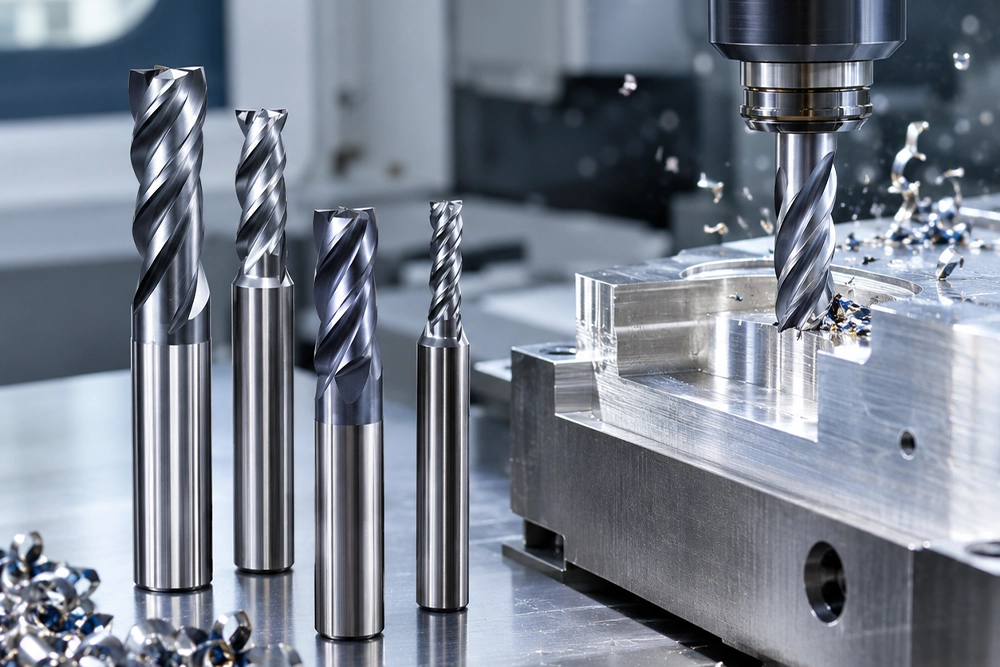
When it comes to CNC machining, the choice of cutting tool can have a major impact on productivity, accuracy, surface finish, and overall production costs. While high-speed steel and other tool materials still have their applications, carbide has become a popular choice for demanding machining operations. Its combination of hardness, heat resistance, wear resistance, and cutting performance makes it suitable for producing precise components across many industries.
But what makes carbide such a practical option for modern CNC work? Let us look at the key benefits and understand why manufacturers continue to rely on it.
What Makes Carbide Suitable for CNC Machining?
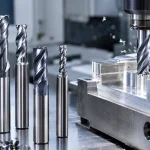
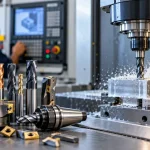
Carbide is a hard material commonly used for manufacturing cutting tools. It is generally made by combining tungsten carbide particles with a binder material, producing a tool that can withstand demanding machining conditions. The material is particularly useful when CNC machines operate at high cutting speeds and feeds. It maintains its hardness at elevated temperatures and can withstand repeated contact with tough workpieces. This combination of strength and stability allows manufacturers to achieve consistent results while keeping production efficient. Here are some key points that make carbide suitable for CNC machining:
- Excellent Hardness and Wear Resistance: One of the biggest advantages of carbide tools is their exceptional hardness. CNC machining can subject a cutting edge to continuous friction, pressure, and heat. Softer tooling materials can wear relatively quickly under these conditions. Carbide maintains a sharp cutting edge for longer, particularly when machining harder materials. Better wear resistance means fewer tool changes and more predictable machining performance. For manufacturers handling large production runs, this can make a noticeable difference to productivity.
- Higher Cutting Speeds: Modern CNC machining is often focused on reducing cycle times without compromising quality. Carbide tooling can operate at higher cutting speeds than many conventional tool materials. Higher speeds allow machines to remove material more efficiently. Depending on the workpiece, machine capabilities, tooling geometry, and cutting parameters, this can shorten production times and increase overall output. However, simply increasing the speed is not enough. Proper feeds, speeds, coolant application, tool geometry, and machine rigidity are still essential for achieving good results.
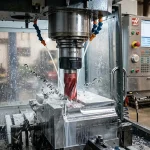
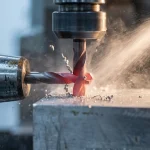
- Better Performance at High Temperatures: Heat is an unavoidable part of machining. Friction between the cutting edge and workpiece generates heat, particularly during high-speed operations. Carbide performs well at elevated temperatures and can retain its hardness better than many traditional tooling materials. This makes it suitable for applications where heat generation is significant. Effective coolant or lubrication strategies can further support tool life by controlling temperature and reducing friction.
- Consistent Surface Finish: The condition of the cutting edge directly affects the surface quality of a machined component. A worn or damaged edge can produce rough surfaces, dimensional inconsistencies, chatter, or other defects. Because carbide maintains its cutting performance for longer, it can help manufacturers achieve a more consistent surface finish throughout a production run. Tool geometry also plays an important role. The correct rake angle, flute design, coating, diameter, and number of cutting edges should be selected according to the material and machining operation.
- Suitable for Hard and Difficult Materials: CNC manufacturers often work with materials that are challenging to machine. Stainless steel, hardened steels, cast iron, titanium alloys, nickel-based alloys, and other engineering materials can place considerable demands on cutting edges. Carbide cutting tools are available in different grades and geometries designed for particular machining conditions. This gives manufacturers greater flexibility when selecting tooling for milling, drilling, turning, and other operations. The right carbide grade can provide the hardness and toughness needed for a specific application.
- Longer Tool Life Can Reduce Downtime: Every tool change takes time. In high-volume manufacturing, frequent changes can interrupt production and increase machine downtime. Longer-lasting tooling can reduce the frequency of these interruptions. Operators can spend less time replacing worn tools and more time producing components. Of course, tool life varies according to several factors, including workpiece material, cutting parameters, machine condition, coolant, tool geometry, and the type of operation being performed. Good machining practices are therefore just as important as selecting the tool material.
- Improved Dimensional Accuracy: Precision is one of the main reasons companies invest in CNC machining. Components may need to meet tight dimensional tolerances, particularly in aerospace, automotive, medical, electronics, and industrial applications. A rigid and wear-resistant cutting edge can help maintain predictable tool geometry during machining. This supports dimensional consistency and reduces the possibility of gradual changes caused by excessive tool wear. For precision components, choosing the correct tooling is therefore an important part of the overall quality-control strategy.
- Different Grades for Different Applications: Another advantage is that carbide is not limited to one standard composition. Different carbide grades can be developed to provide particular combinations of hardness, toughness, wear resistance, and performance. For example, a tool designed for high-speed finishing may have different characteristics from one intended for heavy roughing. Similarly, coatings can be applied to improve performance in specific machining environments. This means manufacturers can select tooling based on the actual application rather than using the same tool for every operation.
- Better Productivity for High-Volume Production: When a manufacturer needs to produce hundreds or thousands of identical components, small improvements in machining efficiency can add up quickly. Longer tool life, higher cutting speeds, reduced tool changes, and consistent performance can contribute to better production efficiency. When tooling is correctly matched to the machine and workpiece, manufacturers can improve throughput without sacrificing the required quality. This is one reason carbide remains widely used in production-oriented CNC environments.
- A Practical Choice for Modern CNC Operations: The benefits of carbide go beyond the cutting edge itself. Tool selection affects machining speed, component quality, machine utilization, maintenance requirements, and production costs. For this reason, manufacturers should consider the complete machining process when selecting tooling. Factors such as workpiece material, machine spindle speed, rigidity, coolant system, operation type, required tolerance, and desired surface finish should all be considered. It is also important to purchase quality tools from a reliable supplier. Poor-quality tooling may result in premature wear, inconsistent performance, and unnecessary production problems.
Are Carbide Tools Always the Best Choice?
Although carbide offers many advantages, it is not automatically the right choice for every application. Some operations may benefit from high-speed steel or other specialized materials depending on cutting conditions, machine limitations, workpiece characteristics, and budget. The goal should be to select the most suitable tool for the specific machining requirement rather than choosing based solely on material type. Experienced machinists can evaluate the application and recommend the appropriate grade, coating, geometry, and cutting parameters.
Carbide tools have become an important part of modern CNC machining because they offer an effective balance of hardness, wear resistance, heat resistance, cutting speed, and dimensional stability. These qualities can help manufacturers improve productivity while maintaining consistent component quality.
Whether the requirement involves roughing, finishing, drilling, milling, or machining difficult materials, the right tooling can have a significant effect on the final result. When properly selected and used with suitable machining parameters, carbide can help reduce downtime, extend tool life, improve surface finish, and support more efficient production.
Ultimately, successful CNC machining is not simply about choosing the hardest tool available. It is about matching the right tool to the machine, material, operation, and production goal. That approach allows manufacturers to make the most of carbide technology while keeping quality and efficiency at the center of the manufacturing process.