
Precision has become a defining factor in modern manufacturing. Industries such as aerospace, automotive, medical devices, electronics, and energy depend on highly accurate holes to ensure product performance, safety, and reliability. Even the slightest variation in diameter, depth, alignment, or surface finish can affect the functionality of a component.
As manufacturers work with complex designs and advanced materials like titanium alloys, composites, and hardened steels, traditional hole-making methods are evolving rapidly. Today, precision drilling combines intelligent software, advanced tooling, and automation to deliver greater accuracy while reducing production time and material waste.
Technological Innovations Driving Hole-Making Excellence
The evolution of hole-making has been fueled by significant advancements in tooling, machinery, and manufacturing techniques. Conventional methods that once relied heavily on manual intervention are being replaced by automated systems capable of maintaining tight tolerances across high-volume production runs. Key innovations include:
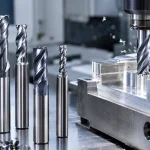
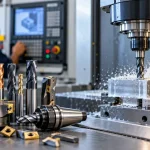
- High-performance cutting tools made from carbide, polycrystalline diamond (PCD), and cubic boron nitride (CBN)
- Advanced tool coatings that reduce friction and improve wear resistance
- Optimized tool geometries for better chip evacuation and surface finish
- Specialized solutions for micro-hole and deep-hole applications
- Non-traditional processes such as laser drilling, electrical discharge machining (EDM), ultrasonic machining, and water jet cutting
Manufacturers are also increasingly adopting multi-axis equipment to produce intricate geometries with fewer setups. By integrating advanced software with CNC machining, businesses can achieve higher consistency, improved flexibility, and shorter production cycles.
Digital Transformation and Automation in Manufacturing
The rise of Industry 4.0 is transforming manufacturing facilities into connected ecosystems where machines, software, and operators work together seamlessly. Modern equipment continuously monitors critical operating parameters and automatically adjusts settings to maintain optimal performance. This data-driven approach improves process stability, reduces downtime, and minimizes human error. Some of the major digital trends include:
- Real-time monitoring of spindle speed, vibration, temperature, and tool wear: Advanced sensors continuously track machine performance and operating conditions, allowing manufacturers to detect abnormalities early and maintain consistent production quality.
- Artificial intelligence for process optimization: AI analyzes production data to recommend optimal cutting parameters, improve efficiency, reduce cycle times, and minimize material waste.
- Predictive maintenance to prevent unexpected machine failures: By evaluating historical and real-time machine data, predictive maintenance systems identify potential issues before breakdowns occur, reducing downtime and repair costs.
- Digital twins for virtual simulation and workflow optimization: Digital twins create virtual replicas of machines or production processes, enabling engineers to test scenarios, optimize workflows, and improve performance before implementation.
- Automated quality control using vision systems and coordinate measuring machines (CMMs): Vision systems and CMMs inspect components with high accuracy during or after production, ensuring that every part meets required specifications and reducing the risk of defects.
- Cloud-based analytics and machine-to-machine communication: Connected machines share data through cloud platforms, providing real-time insights, enabling remote monitoring, and improving coordination across the manufacturing ecosystem.
These advancements are redefining drilling technology by making manufacturing processes smarter, more adaptive, and highly efficient.
Future Opportunities and Sustainability
Sustainability is becoming an essential consideration in manufacturing, encouraging companies to reduce waste and improve resource efficiency without compromising quality. Manufacturers are investing in greener production methods, including:
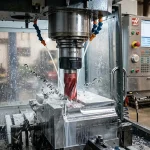
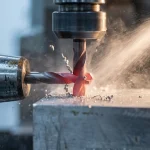
- High-pressure coolant systems that improve heat dissipation: High-pressure coolant systems deliver coolant directly to the cutting zone, helping to control heat generation during machining operations. This improves chip evacuation, extends tool life, enhances surface finish, and maintains dimensional accuracy.
- Minimum quantity lubrication techniques to reduce fluid consumption: Minimum Quantity Lubrication (MQL) uses a small amount of lubricant mixed with compressed air to reduce friction during cutting. This approach significantly lowers coolant usage, minimizes disposal costs, and creates a cleaner working environment.
- Energy-efficient machines that lower operational costs: Modern manufacturing equipment is designed with energy-saving features such as optimized motors, smart power management systems, and efficient drive technologies. These machines reduce electricity consumption while maintaining high productivity and performance.
- Waste reduction initiatives and recycling programs: Manufacturers are implementing strategies to minimize material waste through improved process planning, optimized cutting parameters, and efficient material utilization. Recycling metal chips, used tools, and production scrap further supports sustainable manufacturing practices.
- Eco-friendly coolants and lubricants: Biodegradable and low-toxicity coolants help reduce the environmental impact of manufacturing operations. These sustainable alternatives improve workplace safety, simplify waste management, and support compliance with environmental regulations.
At the same time, growing demand for electric vehicles, advanced medical devices, and lightweight aerospace components is pushing the limits of hole-making capabilities.
Future Manufacturing Trends
Looking ahead, future manufacturing environments are expected to feature:
- Greater use of robotics and autonomous systems: Robots and autonomous equipment will handle repetitive and complex tasks with minimal human intervention, improving productivity, precision, and workplace safety.
- Increased adoption of advanced analytics and machine learning: Advanced analytics and machine learning algorithms will process large volumes of production data to optimize workflows, predict equipment issues, and support smarter decision-making.
- Integration of additive and subtractive manufacturing processes: Combining additive manufacturing with traditional machining techniques will enable manufacturers to produce complex components more efficiently while reducing material waste.
- Enhanced capabilities for processing next-generation materials: New machining technologies and tooling solutions will make it easier to work with advanced materials such as composites, titanium alloys, ceramics, and lightweight metals.
- Higher levels of customization with consistent production quality: Flexible manufacturing systems will allow companies to produce customized components at scale while maintaining consistent quality, accuracy, and production efficiency.
As technology continues to evolve, manufacturers that embrace automation, digitalization, and sustainable practices will be better equipped to meet changing market demands. A reliable CNC cutting tool supplier can support these advancements with precision tooling solutions. The future of precision hole-making lies in creating smarter, faster, and more efficient processes that deliver exceptional quality while supporting long-term growth.