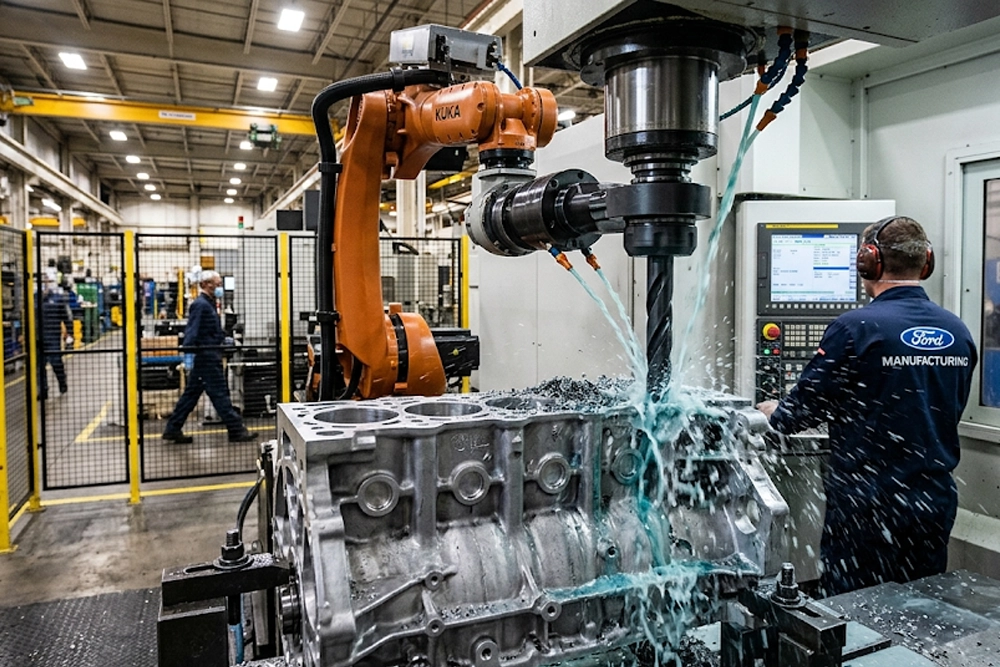
The automotive industry is built on precision, efficiency, and reliability. Every vehicle is made up of thousands of components that must fit together perfectly to ensure safety, performance, and durability. From engine blocks and transmission systems to suspension components and brake assemblies, each part undergoes multiple machining operations before it reaches the assembly line.
Among the many cutting tools used in modern machining, solid carbide drills have become indispensable. Known for their exceptional hardness, wear resistance, and precision, these tools help manufacturers produce accurate holes in a wide range of materials while maintaining high productivity. As vehicle designs become more sophisticated and production demands continue to rise, solid carbide drills play an increasingly important role in maintaining quality and operational efficiency.
The Importance of Precision in the Automotive Industry
Manufacturing automotive components requires extremely tight tolerances. Even a slight deviation can affect the performance of an engine, gearbox, or braking system. Precision drilling is particularly important because many components require accurately positioned holes for bolts, fasteners, lubrication channels, and cooling passages.
Modern automotive manufacturing depends on advanced machining technologies that consistently deliver repeatable results while supporting high-volume production. Precision drilling helps ensure proper component alignment, reliable assembly, and long-term vehicle performance.
What Are Solid Carbide Drills?
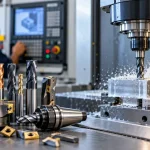
Solid carbide drills are cutting tools manufactured entirely from carbide material rather than having only carbide tips. Carbide is significantly harder than high-speed steel (HSS), allowing these drills to maintain sharp cutting edges even under demanding machining conditions.
Their superior hardness enables them to cut through difficult materials while producing smooth finishes and maintaining dimensional accuracy. They are widely used in CNC machining centers where speed, consistency, and tool life are critical. Because of their strength and durability, solid carbide drills are commonly chosen for continuous production environments where precision cannot be compromised.
Why Carbide Outperforms Conventional Drill Materials?
When compared to traditional high-speed steel drills, carbide drills offer several significant advantages:
- Higher Hardness: Carbide remains sharp much longer than conventional drill materials, reducing tool wear and improving machining consistency.
- Better Heat Resistance: High-speed machining generates considerable heat. Carbide maintains its cutting performance even at elevated temperatures, minimizing tool deformation and improving machining stability.
- Longer Tool Life: Extended tool life means fewer tool changes, reduced downtime, and lower production costs.
- Superior Dimensional Accuracy: Carbide drills produce holes with tighter tolerances, improving component quality and minimizing secondary finishing operations.
- Increased Productivity: Their ability to operate at higher cutting speeds allows manufacturers to complete machining operations more efficiently.
Applications in Automotive Component Production
Solid carbide drills are used throughout vehicle manufacturing for machining various precision components. Common applications include:
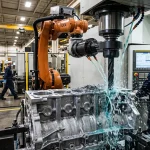
- Engine Components: Engine blocks, cylinder heads, connecting rods, crankshafts, and camshafts require accurately drilled holes to ensure proper assembly and efficient engine performance.
- Transmission Systems: Transmission housings and gear assemblies contain multiple precision holes that support bearings, shafts, and fasteners.
- Brake Components: Brake calipers, brake discs, and hydraulic components require precise drilling to ensure safe braking performance.
- Suspension Parts: Control arms, steering knuckles, suspension brackets, and mounting components depend on accurately machined holes for secure installation.
- Chassis Components: Vehicle frames and structural parts require precision drilling to maintain assembly accuracy and structural integrity.
- Electric Vehicle Components: As electric vehicles become more popular, carbide drills are increasingly used to machine battery housings, electric motor components, cooling systems, and lightweight aluminum structures.
Supporting High-Speed CNC Machining
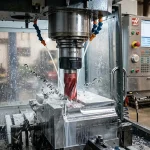
Today’s automotive production lines rely heavily on CNC machining for consistency and efficiency. Carbide drills are specifically designed to perform well under high-speed machining conditions by offering:
- Excellent chip evacuation
- Stable cutting performance
- Reduced vibration
- Improved hole quality
- Higher feed rates
- Better process reliability
These characteristics allow manufacturers to maximize machine utilization while maintaining consistent quality throughout production.
Machining a Wide Range of Materials
Modern vehicles use numerous materials to improve strength while reducing overall weight. Solid carbide drills perform effectively on materials such as:
- Aluminum alloys
- Cast iron
- Carbon steel
- Stainless steel
- Tool steel
- Titanium alloys
- High-strength alloy steels
- Composite materials (with appropriate tooling)
Their versatility makes them suitable for machining diverse automotive components using a single tooling solution.
Improving Production Efficiency
High-volume manufacturing requires machining processes that are both fast and reliable. Solid carbide drills contribute to production efficiency by:
- Reducing machining cycle times
- Minimizing tool replacement frequency
- Lowering maintenance interruptions
- Producing consistent hole quality
- Supporting automated manufacturing systems
These benefits help manufacturers improve throughput while maintaining strict quality standards.
Enhancing Component Quality
Accurate drilling directly affects the performance of finished automotive components. Precision holes contribute to:
- Proper bolt alignment
- Secure fastener installation
- Accurate bearing placement
- Smooth assembly operations
- Reduced vibration
- Improved structural integrity
Consistent machining quality also minimizes the need for rework and reduces production waste.
Cost Savings Through Better Tool Performance
Although carbide drills generally have a higher initial purchase cost than conventional drills, they often provide greater long-term value. Manufacturers benefit from:
- Longer tool life
- Fewer tool replacements
- Reduced machine downtime
- Lower labor costs
- Less scrap material
- Improved production efficiency
Over large production volumes, these savings can significantly reduce overall manufacturing costs.
Choosing the Right Solid Carbide Drill
Selecting the appropriate drill depends on several machining factors. Manufacturers should consider:
- Workpiece material
- Hole diameter
- Hole depth
- Cutting speed
- Feed rate
- Coolant availability
- Machine capability
- Required surface finish
- Production volume
Using the correct drill geometry and coating helps maximize tool performance and extend service life.
Best Practices for Maximum Performance
To achieve consistent results, manufacturers should follow several best practices when using carbide drills.
- Optimize Cutting Parameters: Use recommended cutting speeds and feed rates based on the material being machined.
- Ensure Proper Tool Holding: Rigid tool holders minimize vibration and improve drilling accuracy.
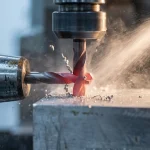
- Use Effective Coolant Delivery: Proper cooling reduces heat buildup, improves chip evacuation, and extends tool life.
- Monitor Tool Wear: Regular inspection helps identify wear before it affects component quality.
- Maintain Machine Stability: Well-maintained CNC machines provide better positioning accuracy and longer tool life.
- Train Machine Operators: Experienced operators can optimize machining parameters and quickly identify potential production issues.
The Future of Precision Drilling in the Automotive Industry
As the automotive industry advances, precision drilling technologies are evolving to meet the demands of lightweight materials, electric vehicle (EV) production, and increasingly complex component designs. Manufacturers require cutting tools that not only deliver exceptional accuracy but also improve productivity, reduce downtime, and support high-volume production. Continuous innovations in drilling technology are helping manufacturers achieve these goals while maintaining stringent quality standards.
Key developments shaping the future include:
- Advanced Tool Coatings: New coating technologies improve wear resistance, reduce friction, and extend tool life.
- Optimized Drill Geometries: Innovative drill designs enhance chip evacuation, improve hole quality, and enable faster machining.
- Smart Machining Technologies: Intelligent machining systems use real-time data to optimize cutting performance and improve operational efficiency.
- Automated Quality Monitoring: Integrated inspection systems detect deviations during production, helping maintain consistent component quality.
- Predictive Maintenance: Data-driven maintenance schedules reduce unexpected machine downtime and maximize equipment performance.
Together, these advancements are enabling automotive manufacturers to produce high-quality components more efficiently while meeting the industry’s growing expectations for precision, reliability, and productivity.
Precision drilling is a critical part of producing reliable automotive components, and solid carbide drills have become one of the most valuable tools in modern machining operations. Their ability to deliver exceptional accuracy, long tool life, superior wear resistance, and high-speed performance makes them an ideal choice for manufacturing complex vehicle parts.
As the automotive industry embraces advanced materials, automation, and electric vehicle production, the demand for high-performance cutting tools will continue to grow. By investing in the right drilling solutions and following best machining practices, manufacturers can improve productivity, reduce costs, and consistently produce components that meet the highest standards of quality and performance.