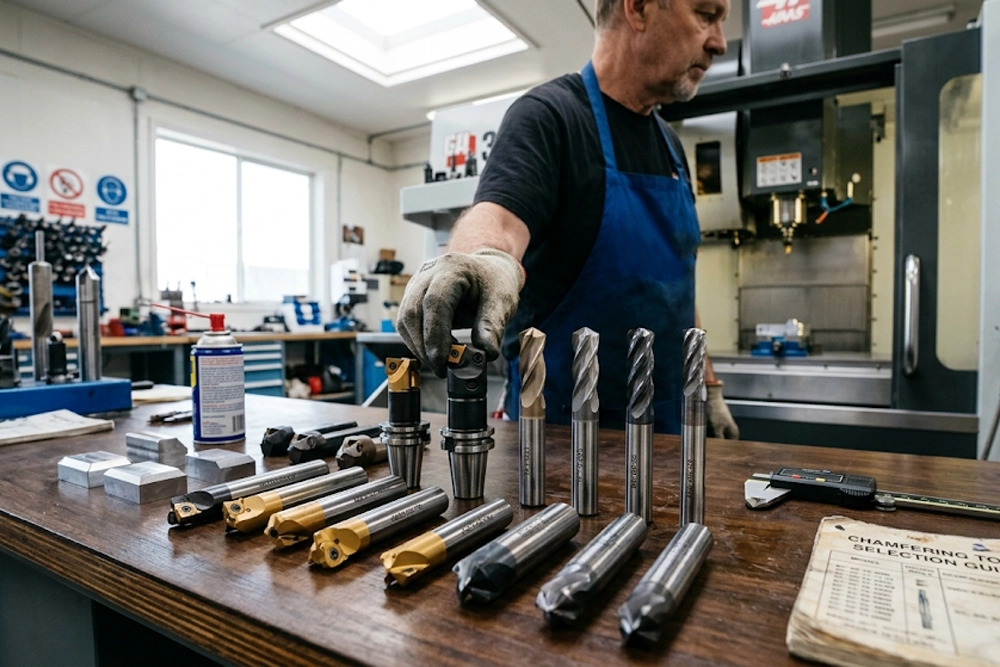
Chamfering is an important finishing operation in CNC machining. It involves removing a sharp edge from a machined component and replacing it with a small angled surface. A properly made chamfer can improve the appearance of a part, make assembly easier, reduce the risk of sharp edges, and improve overall component quality. However, achieving consistent results depends heavily on selecting the right cutting tool for the application.
With many tool geometries, materials, sizes, and coating options available, choosing the appropriate tool can sometimes be challenging. Whether you are producing prototypes or large production batches, understanding the key factors involved in tool selection can help improve machining efficiency and surface quality.
Key Factors to Consider When Choosing a Chamfering Tool
- Understand the Purpose of the Chamfer: Before selecting a tool, determine why the chamfer is required. Some components need chamfers primarily to remove sharp edges, while others require them for assembly, welding, countersinking, or improving the overall appearance of the finished part. The required chamfer angle and depth should be clearly identified from the engineering drawing or CAD model. Common chamfer angles include 45 degrees, although specialized applications may require different geometries. Choosing a tool that matches the required profile helps prevent unnecessary machining passes and dimensional inconsistencies.
- Consider the Workpiece Material: The material being machined is another major consideration. Aluminum, mild steel, stainless steel, brass, titanium, and engineering plastics all respond differently to cutting operations. For softer materials such as aluminum, a sharp cutting edge and suitable flute design can help prevent material buildup and produce a clean finish. Harder materials may require tools made from carbide or other wear-resistant materials. When sourcing Chamfering tools in Dubai, manufacturers should ensure that the selected tool is suitable for the specific material being processed. Using a tool designed for the wrong material can result in premature wear, poor surface finish, vibration, or inconsistent chamfer dimensions.
- Select the Appropriate Tool Material: Tool material directly affects durability, cutting performance, and productivity. High-speed steel tools can be suitable for certain general-purpose applications and lower-speed operations. However, carbide tools are widely preferred for demanding CNC applications because of their hardness and resistance to wear. Solid carbide chamfering tools can support higher cutting speeds and maintain their cutting geometry for longer periods when used under appropriate conditions. For high-volume production, the longer tool life can help reduce tool changes and production interruptions. The right choice ultimately depends on the workpiece material, machine capability, cutting conditions, production volume, and required finish.
- Check the Tool Diameter and Geometry: Tool diameter should correspond to the size and accessibility of the feature being machined. A tool that is too large may not reach narrow areas, while an undersized tool may require additional passes to create the desired chamfer. Geometry is equally important. The number of flutes, cutting angle, relief angle, and edge design can influence chip evacuation, cutting stability, and surface finish. For complex components, manufacturers should also consider whether the tool can reach the required areas without interference from the workpiece, fixture, or other machine components.
- Match the Tool to the CNC Machine: Not every chamfering tool is suitable for every CNC machine. Check the machine’s spindle speed range, power, tool-holding system, and maximum feed capabilities before purchasing. Toolholders and collets should provide sufficient gripping force and concentricity. Excessive runout can cause uneven chamfers, vibration, and accelerated tool wear. A reliable CNC tool supplier can help manufacturers select tooling that matches their machine specifications. This is especially useful when working with different CNC milling machines, machining centers, or automated production equipment.
- Consider Coatings for Demanding Applications: Tool coatings can improve wear resistance and cutting performance in many machining applications. Depending on the tool and workpiece material, coatings such as TiN, TiAlN, or other advanced options may be considered. Coated carbide tools can be particularly useful when machining abrasive or harder materials. However, coating selection should not be based solely on the assumption that a more advanced coating is always better. The coating should be matched to the material, cutting speed, coolant conditions, and intended application. Discussing these requirements with experienced Chamfering tools in Dubai providers can help manufacturers identify practical options instead of selecting tools based only on price or appearance.
- Evaluate Required Chamfer Accuracy: Precision requirements should always influence tool selection. If the component requires highly consistent chamfer dimensions across hundreds or thousands of parts, tool rigidity, geometry, and repeatability become especially important. For general deburring, a standard chamfering tool may be sufficient. However, precision components may require specialized tooling capable of maintaining tight dimensional control. Manufacturers should also consider how the tool will be measured and inspected during production. Consistent inspection helps identify tool wear before it begins affecting part quality.
- Pay Attention to Cutting Parameters: Even the best tool can perform poorly when incorrect cutting parameters are used. Spindle speed, feed rate, depth of cut, and coolant selection should be adjusted according to the tool manufacturer’s recommendations. Starting with recommended parameters and making controlled adjustments can help achieve the right balance between tool life, productivity, and surface finish. Excessive feed rates can damage cutting edges, while overly conservative settings may reduce productivity. A knowledgeable CNC tool supplier can often provide guidance on recommended operating parameters for specific tooling and materials.
- Consider Production Volume: Production volume also affects the most economical tool choice. For occasional machining or prototype work, a general-purpose tool may provide sufficient performance. High-volume manufacturing may justify premium carbide tooling, specialized coatings, or optimized geometries. Although a higher-quality tool may have a greater initial purchase price, longer tool life and reduced downtime can lower the overall cost per component. Therefore, tooling decisions should be based on total machining cost rather than purchase price alone.
- Choose a Reliable Tooling Partner: The quality of the supplier matters almost as much as the tool itself. A reliable supplier should be able to provide accurate specifications, consistent product quality, technical guidance, and suitable options for different machining requirements. When comparing Chamfering tools in Dubai, consider factors such as tool availability, technical support, product range, delivery reliability, and after-sales assistance. These factors become particularly important for manufacturers operating continuous production lines. Working with an experienced CNC tool supplier can also make it easier to standardize tooling across multiple machines and applications. This can simplify inventory management and help operators follow consistent machining practices.
Choosing the right chamfering tool involves more than simply selecting a tool with the desired angle. Workpiece material, tool material, diameter, geometry, coating, machine compatibility, accuracy requirements, cutting parameters, and production volume should all be considered before making a decision.
The right tooling choice can produce cleaner edges, improve dimensional consistency, extend tool life, and reduce unnecessary machining costs. By evaluating the complete application and working with trusted Chamfering tools in Dubai specialists, manufacturers can select tooling that delivers reliable performance.
For businesses looking to improve CNC machining efficiency, partnering with an experienced CNC tool supplier can provide valuable technical support and help ensure that every chamfering operation is performed with the right tool for the job.